
DADISICK Optical Sensors Achieve EU Compliance Certification for Enhanced Industrial Reliability
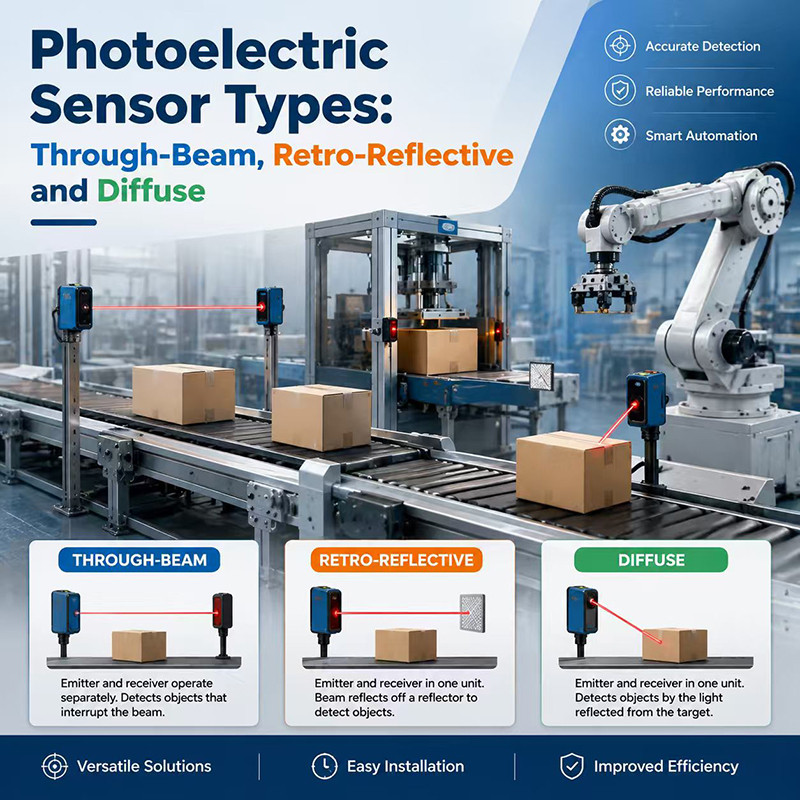
Photoelectric sensors are widely used in industrial automation systems for object detection, positioning, counting, and monitoring. By using light transmission and reflection principles, these sensors can detect objects without physical contact, making them essential components in manufacturing equipment, packaging machines, conveyor systems, and robotic applications.
However, choosing the right photoelectric sensor can be challenging because different sensing methods have different advantages and limitations.
The three most common types of photoelectric sensors are:
· Through-beam photoelectric sensors
· Retro-reflective photoelectric sensors
· Diffuse reflective photoelectric sensors
Understanding the differences between these sensing methods can help engineers select the most suitable sensor for their applications.
What Is a Photoelectric Sensor?
A photoelectric sensor is an industrial sensor that detects objects by using a light beam, usually infrared or visible light.
Unlike mechanical switches or contact sensors, photoelectric sensors can detect objects without physical contact, which provides:
· Faster response speed
· Longer service life
· Flexible installation
· Reliable object detection
Depending on how light travels from the transmitter to the receiver, photoelectric sensors are primarily divided into three categories.
For more information about industrial photoelectric sensor solutions, you can visit DADISICK's Photoelectric Sensor Products page.
Through-Beam Photoelectric Sensor
Working Principle
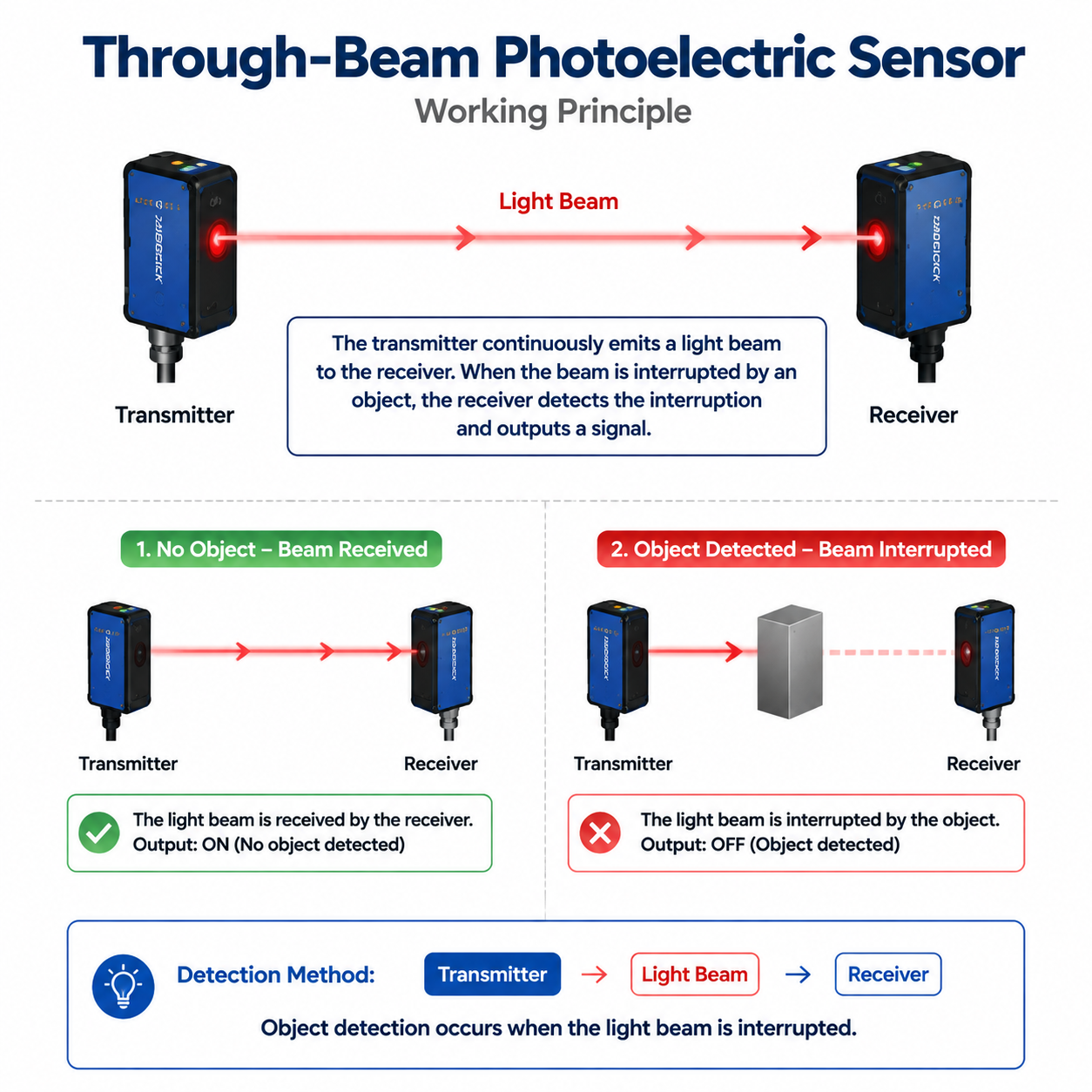
A through-beam photoelectric sensor consists of two separate units:
· Transmitter· Receiver
The transmitter continuously emits a light beam toward the receiver. When an object blocks the light path, the receiver detects the interruption and outputs a signal.
Detection method:
Transmitter → Light Beam → Receiver
Object detection occurs when the beam is interrupted.
Advantages of Through-Beam Photoelectric Sensors
Long Detection Distance
Through-beam sensors generally provide the longest sensing distance among photoelectric sensor types, making them suitable for large machines and long conveyor lines.
High Detection Stability
Because the receiver detects a direct light beam, the sensor is less affected by:
· Object color
· Surface texture
· Reflectivity
Reliable for Small Objects
They are often used when accurate detection of small targets is required.
Limitations
Although through-beam sensors provide excellent performance, they also have some limitations:
· Require separate installation of transmitter and receiver
· Need precise alignment during installation
· Require more mounting space
Common Applications
Through-beam photoelectric sensors are commonly used in:
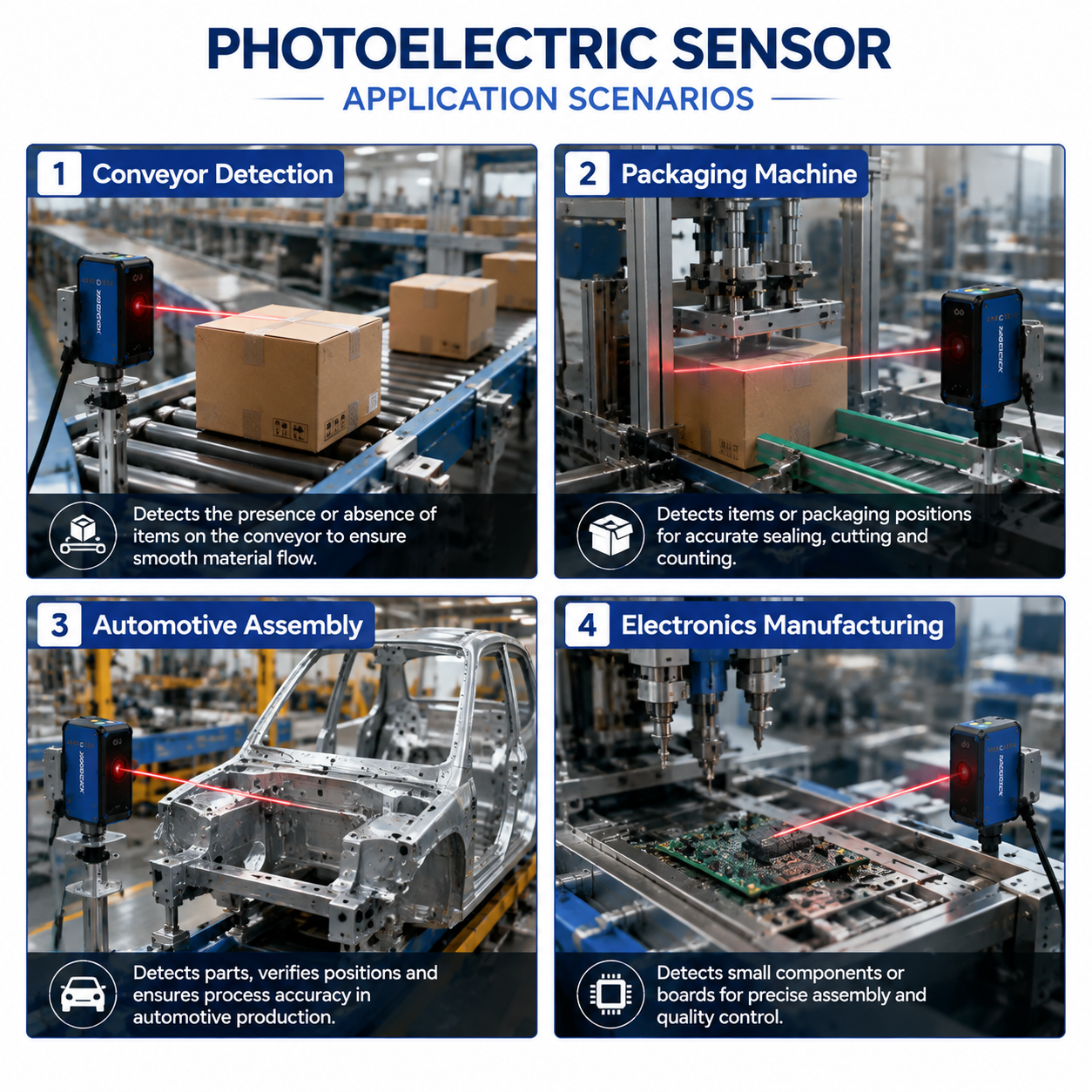
· Conveyor object detection
· Packaging equipment
· Automotive production lines
· Material handling systems
Retro-Reflective Photoelectric Sensor
Working Principle
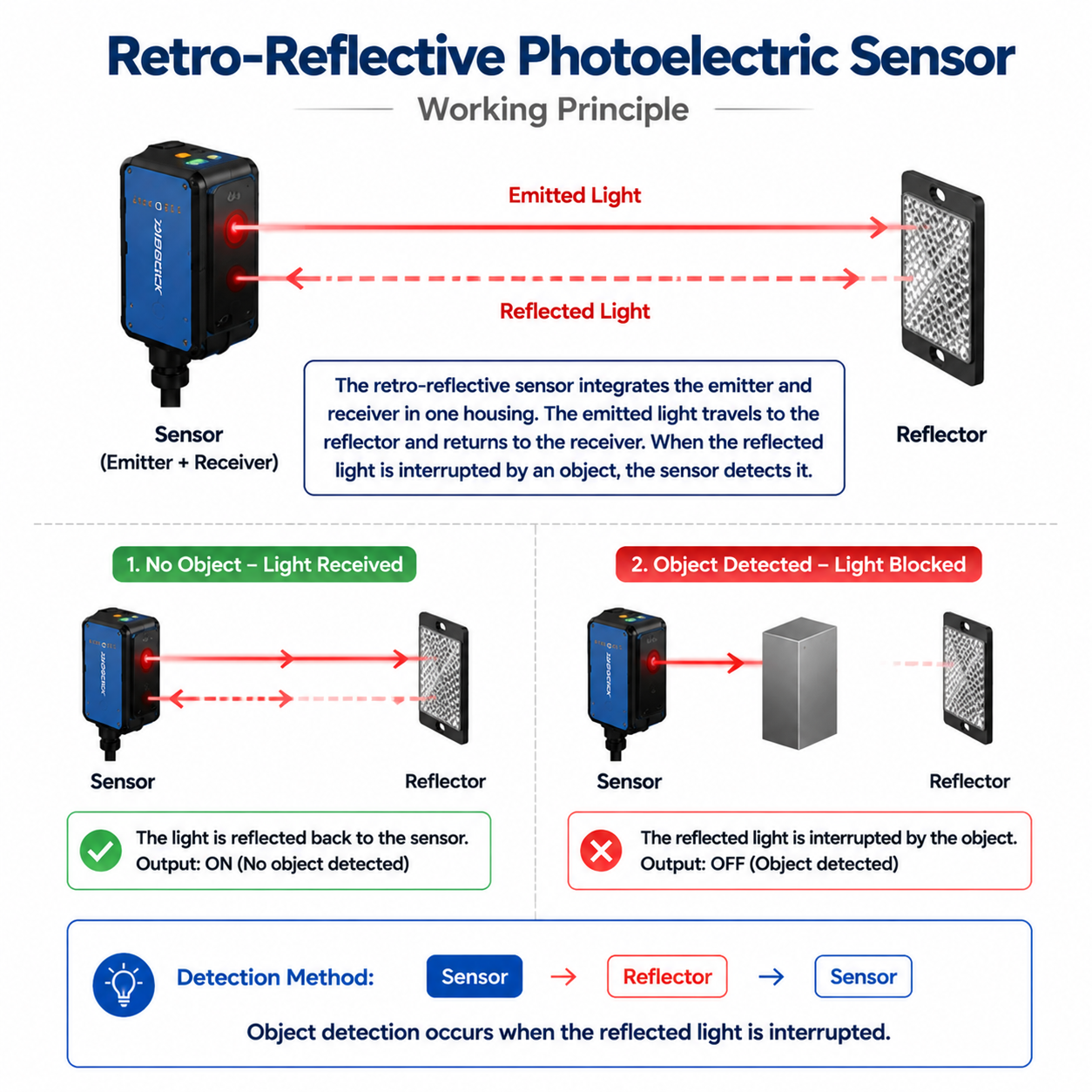
A retro-reflective sensor integrates the transmitter and receiver into the same housing.
A reflector is installed opposite the sensor. The emitted light travels to the reflector and returns to the receiver.
Detection method:
Sensor → Reflector → Sensor
When an object blocks the reflected light, the sensor detects the interruption.
Advantages of Retro-Reflective Photoelectric Sensors
Easy Installation
Compared with through-beam sensors, retro-reflective sensors require only one sensor unit and one reflector.
Space Saving
They are suitable for applications where installation space is limited.
Cost Effective
Because fewer components are required, retro-reflective sensors are widely used in general automation equipment.
Limitations
Retro-reflective sensors may be affected by:
· Highly reflective objects
· Transparent materials
· Strong ambient light
For applications involving shiny metal surfaces or transparent products, engineers should carefully evaluate the sensing environment.
Common Applications
Typical applications include:
· Packaging machines
· Bottle detection
· Product counting
· Conveyor systems
Diffuse Reflective Photoelectric Sensor
Working Principle
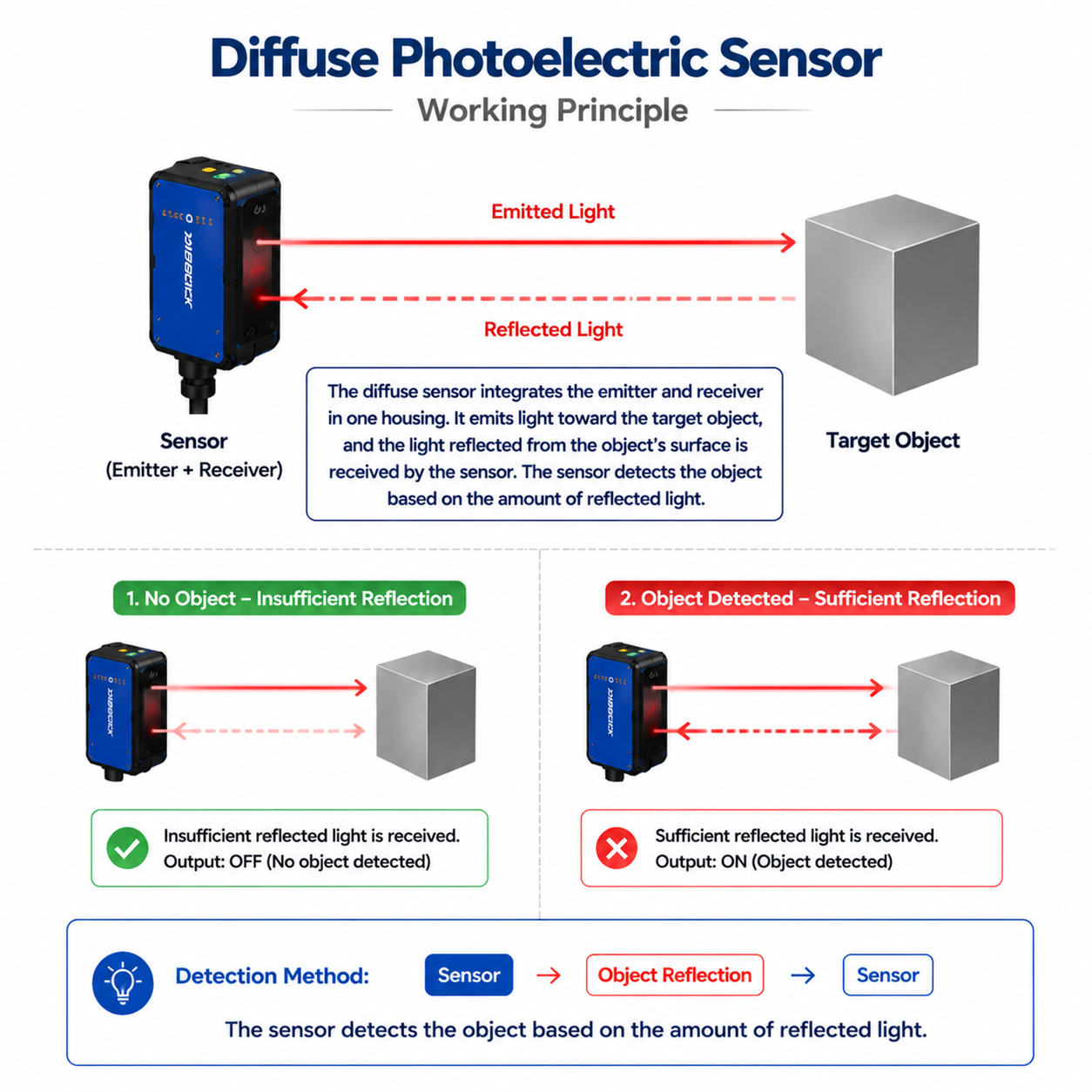
Diffuse reflective sensors combine the transmitter and receiver in one housing.
The sensor emits light toward the target object, and the reflected light from the object's surface returns to the receiver.
Detection method:
Sensor → Object Reflection → Sensor
The sensor detects objects based on the amount of reflected light.
Advantages of Diffuse Reflective Photoelectric Sensors
Simple Installation
Only one sensor unit is required, making installation easier.
Flexible Mounting
Diffuse sensors are suitable for compact machines where space is limited.
Suitable for Short Distance Detection
They are commonly used for detecting objects at short or medium distances.
Limitations
Detection performance depends on:
· Object color
· Surface material
· Reflection characteristics
· Background interference
Dark or low-reflective objects may require sensors with background suppression technology.
Common Applications
Diffuse sensors are widely used in:
· Assembly machines
· Electronic manufacturing
· Small part detection
· Automated inspection systems
Through-Beam vs Retro-Reflective vs Diffuse: Comparison Table
| Feature | Through-Beam | Retro-Reflective | Diffuse Reflective |
| Detection Distance | Longest | Medium | Short to Medium |
| Installation | More complex | Easy | Easiest |
| Stability | Excellent | Good | Depends on target |
Object Color Influence | Low | Medium | High |
Required Components | Two units | Sensor + reflector | One sensor |
Best Application | Long-distance detection | General automation | Compact equipment |
How to Choose the Right Photoelectric Sensor?
Before selecting a photoelectric sensor, engineers should consider the following factors:
1. Detection Distance
For long-distance applications, through-beam sensors are usually the preferred choice.
For compact equipment, diffuse or retro-reflective sensors may be more suitable.
2. Object Material and Surface
Consider whether the target object is:
· Metal
· Plastic
· Transparent
· Dark-colored
· Highly reflective
Different materials affect light reflection performance.
3. Installation Space
If the machine's structure provides limited installation space, a compact diffuse-reflective sensor may be a better option.
4. Output Requirements
Industrial automation systems commonly use:
· NPN output
· PNP output
· Relay output
Always confirm compatibility with the controller or PLC before installation.
DADISICK Photoelectric Sensor Solutions
DADISICK provides various photoelectric sensor solutions designed for industrial automation applications, including different sensing modes and detection requirements.
Our photoelectric sensors are suitable for:
· Automated production lines
· Packaging equipment
· Conveyor systems
· Machine-building applications
To select the right model according to your application requirements, please refer to our Photoelectric Sensor Series or contact our technical team for support.
Conclusion
Through-beam, retro-reflective, and diffuse reflective sensors each have their own advantages.
· Choose through-beam sensors when you need long-distance and highly stable detection.
· Choose retro-reflective sensors for easy installation and general automation applications.
· Choose diffuse reflective sensors when space is limited and simple object detection is required.
Understanding these differences will help engineers improve equipment reliability and choose the most suitable photoelectric sensor solution.
Related Photoelectric Sensors
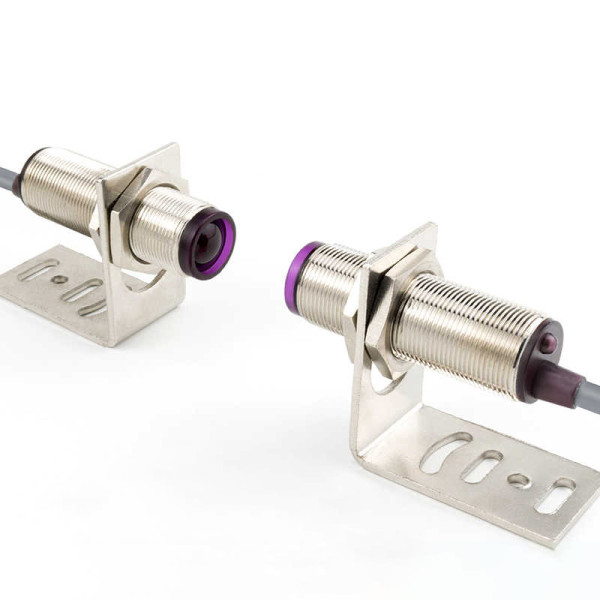
Detection range: 5000 mm, 15000 mm
Material: Nickel-copper alloy
Connection type: 3pin/4pin with 2M cable
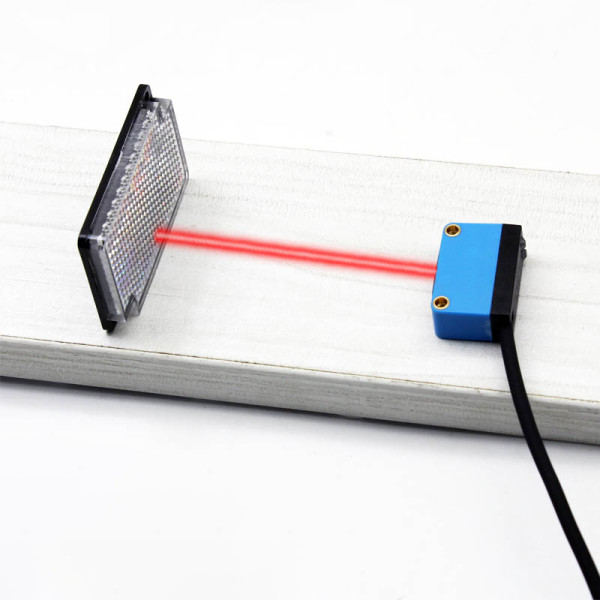
Detection distance: 30-150mm, 2M, 10M
Power supply voltage: DC12-24V
No-load current:9mA , 9mA, Reflection 11mA, reception 9mA
Connection method:Wire lead type (standard wire length 2m)
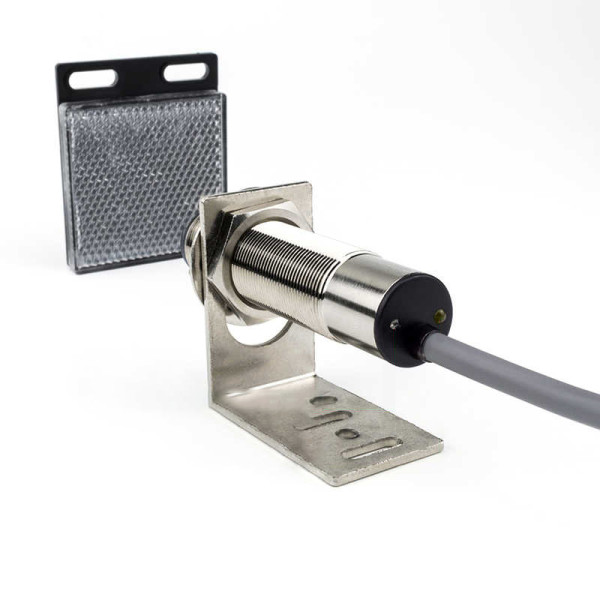
Detection range: 2000 mm, 3000 mm
Material: Nickel-copper alloy
Connection type: 3pin/4pin with 2M cable
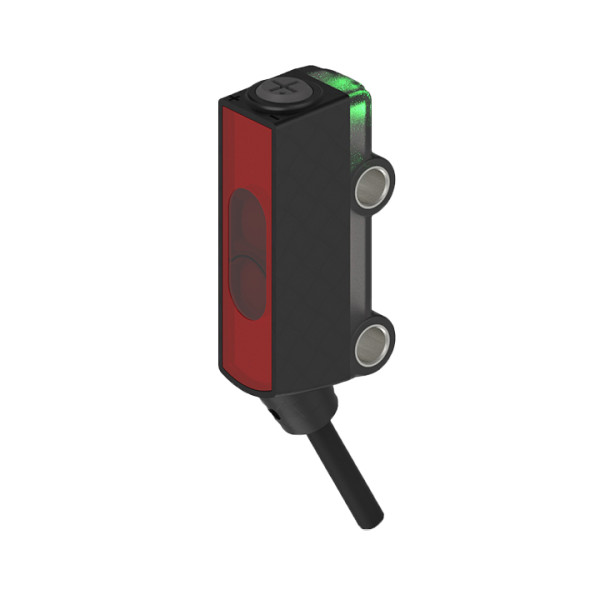
Maximum detection distance: 2 - 150 mm
Stable detection distance: 3 - 120 mm
Power supply voltage: 12 - 24 V DC
Switch output: NPN/PNP
Connection type: Cable, 4 cores, 2 m