
Industrial Color Sensors: The Complete Guide to Selection, Applications & Troubleshooting
Machine vision systems are becoming increasingly common in industrial automation. However, many inspection tasks—such as color mark detection, label verification, and product identification—can be completed more efficiently with an industrial color sensor. Yet in a wide range of medium-to-high-speed production-line scenarios, a single color sensor costing a fraction of a vision system is all it takes to solve 80% of detection challenges — no industrial PC, no complex image algorithm required.
Despite this, many engineers encounter the same frustrating problems in practice: false triggers, missed detections at high speeds, and near-impossible calibration. As a front-line DADISICK technical engineer who has handled more than 200 color-sensor consultations over the past year, I've seen every one of these failure modes up close.
This article approaches the topic from three angles: engineering physics fundamentals, practical selection logic, and production-line deployment best practices — so you can fully understand color sensors and confidently apply them.
Understanding the Fundamentals: What Does a Color Sensor Actually "See"?
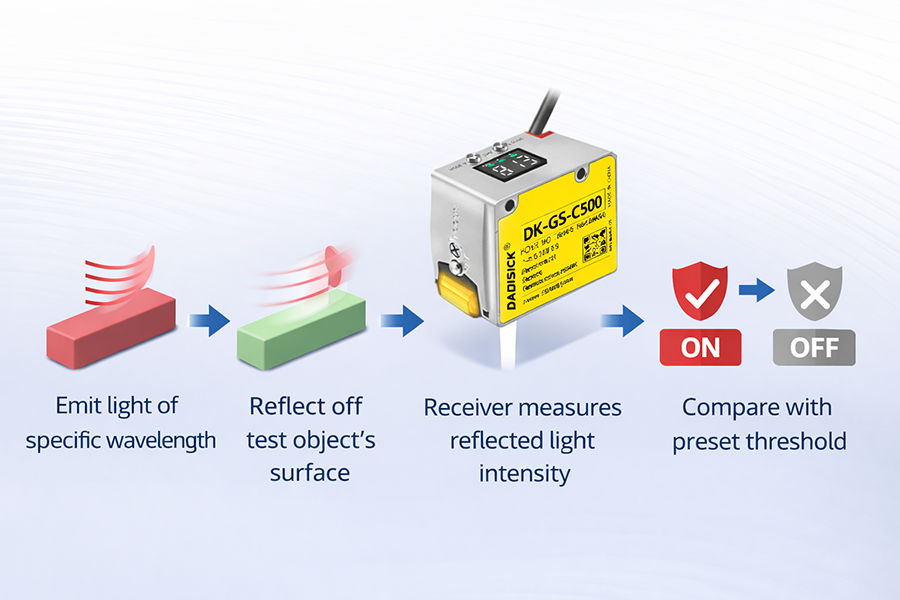
It Measures Reflectance — Not Color
The intuitive assumption many engineers make is that a color sensor perceives color the way the human eye does. This is one of the most common misconceptions when selecting industrial color sensors.
The core operating principle of a color sensor is:
Emit light at a specific wavelength → Surface reflects light → Receiver measures reflected intensity → Compare with preset threshold → Output switching signal
Different colors reflect the same wavelength of light at very different rates:
| Target Color | Red Light (640 nm)Reflectance | Green Light (525 nm Reflectance | Blue Light (470 nm) Reflectance |
| White | High (~85% | High (~85%) | High (~80%) |
| Red | Extremely High (~90%) | Low (~15%) | Extremely Low (~5%) |
Green | Low (~10%) | Extremely High (~85%) | Low (~8%) |
Blue | Extremely Low (~5%) | Low (~12%) | Extremely High (~82%) |
Black | Extremely Low (~3%) | Extremely Low (~3%) | Extremely Low (~3%) |
Key Insight: This is exactly why using a single-color LED to detect a specific color mark can fail. A red LED shining on a red mark yields ~90% reflectance — but the same LED on a white background returns ~85%. The contrast gap is only 5%, making reliable discrimination nearly impossible.
White Light vs. RGB: Two Fundamentally Different Approaches
With the above principle in mind, it becomes clear why DADISICK offers two distinct color sensor product lines
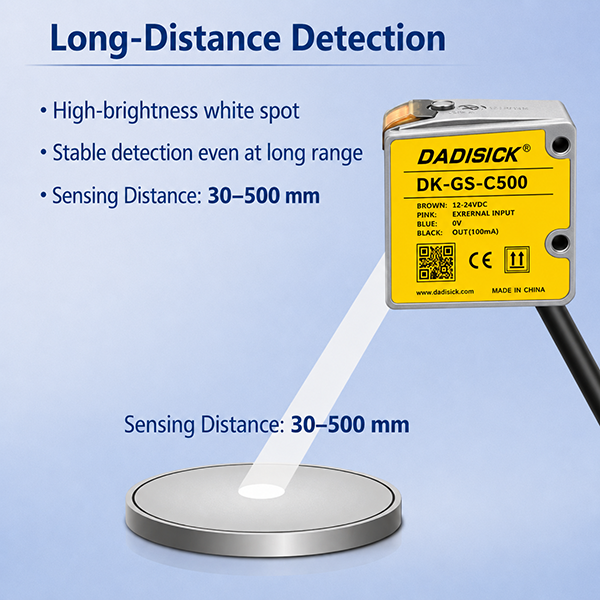
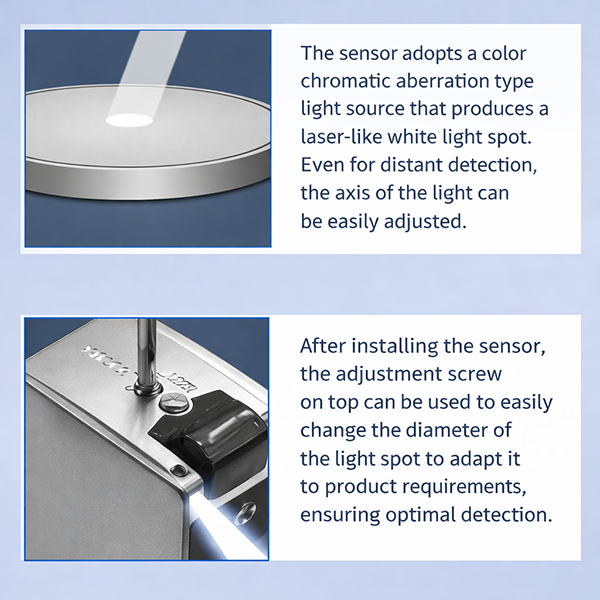
White-Light LED Approach — DK-GS-C500 Series
· Emits broad-spectrum white light; measures overall broadband reflectance contrast
· Highly versatile — no prior knowledge of target color required
· Less effective when two colors differ only in a narrow wavelength band
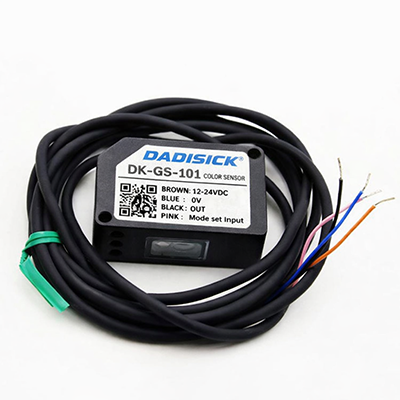
RGB Tri-Color Composite Approach — DK-GS-101 Series
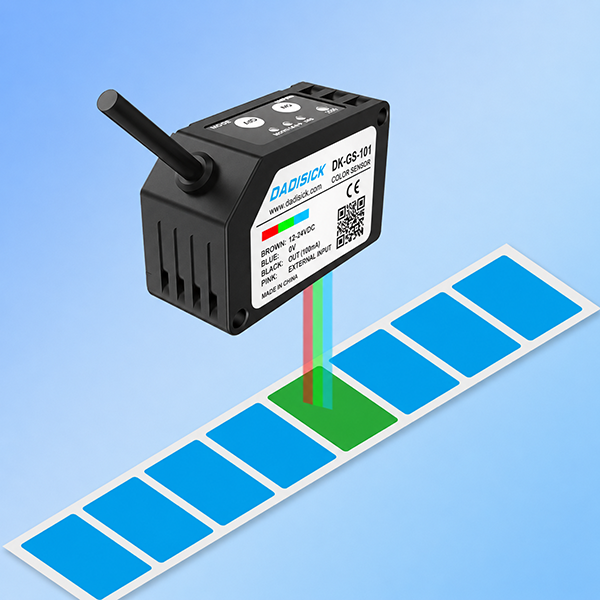
· Independent Red (640 nm), Green (525 nm), Blue (470 nm) emission; sensor auto-selects the channel with maximum reflectance contrast
· Extremely high accuracy for specific color combinations
· Per-detection pass optimizes a single channel; multi-color mixing requires re-teaching
Engineer's Analogy: The white-light approach is like using one flashlight and judging the overall brightness difference. The RGB approach is like using three different-colored flashlights, then choosing whichever shows the most obvious contrast.
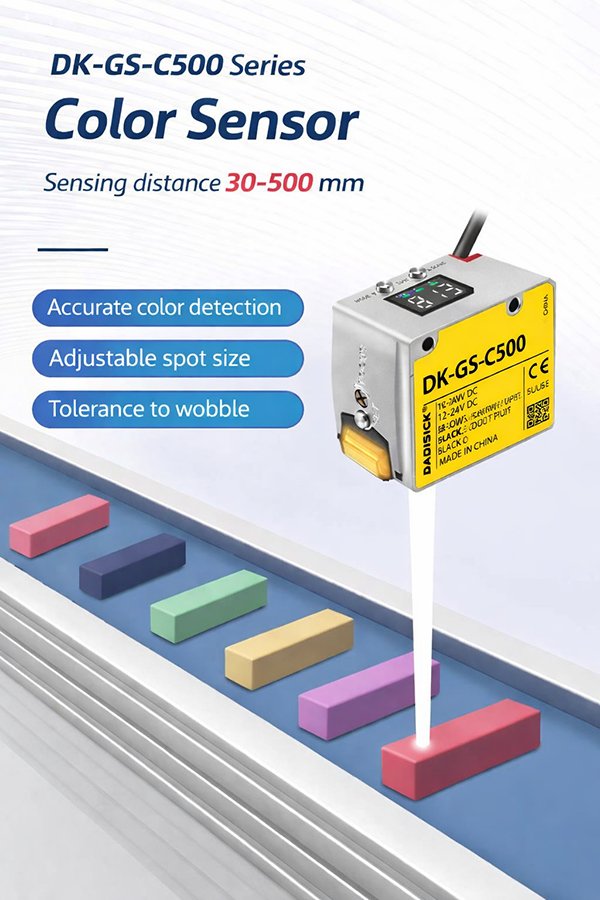
Selection Decision Tree: Three Steps to the Right Product
The most common question in technical support: "How do I choose between the GS-101 and GS-C500?" Here is a practical decision workflow:
Step 1 — Determine Detection Distance
· Distance < 30 mm → Proceed to Step 2
· Distance 50–500 mm → Select DK-GS-C500 directly
Step 2 — Characterize the Detection Target
· Single fixed-color mark (e.g., a brand's proprietary spot color) → Select DK-GS-101
· Multiple colors, frequent changeover → Select DK-GS-C500 (white-light versatility wins)
· Need to verify color consistency (not just presence/absence) → Select DK-GS-101 in Color Mode
Step 3 — Determine Output Type
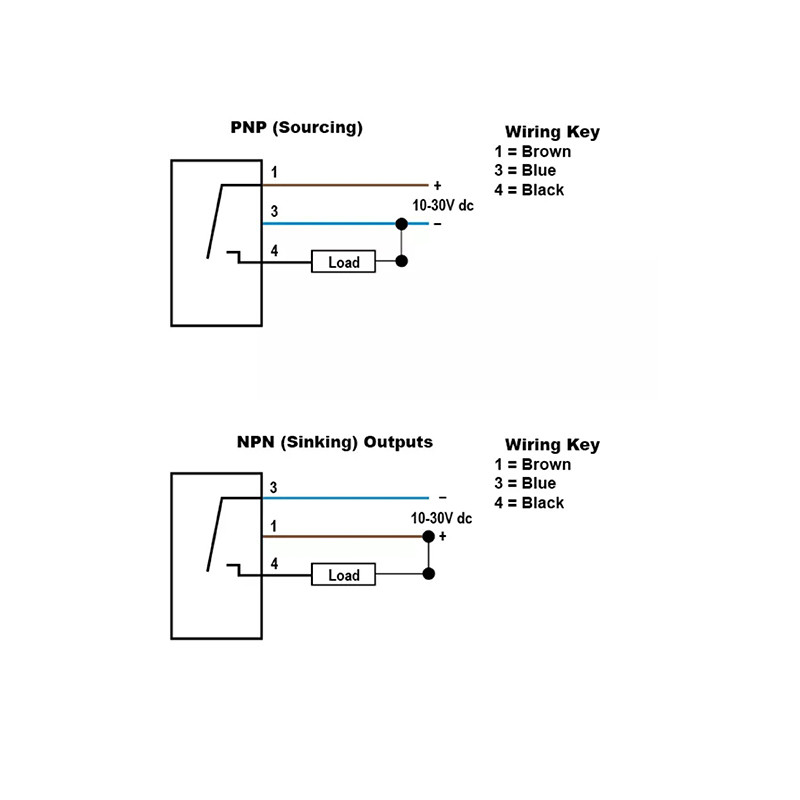
· Japanese-origin PLC (Mitsubishi, Omron, etc.) → NPN (DK-GS-101N / DK-GS-C500N)
· European-origin PLC (Siemens, Beckhoff, etc.) → PNP (DK-GS-101P / DK-GS-C500P)
DADISICK Core Products: In-Depth Comparison
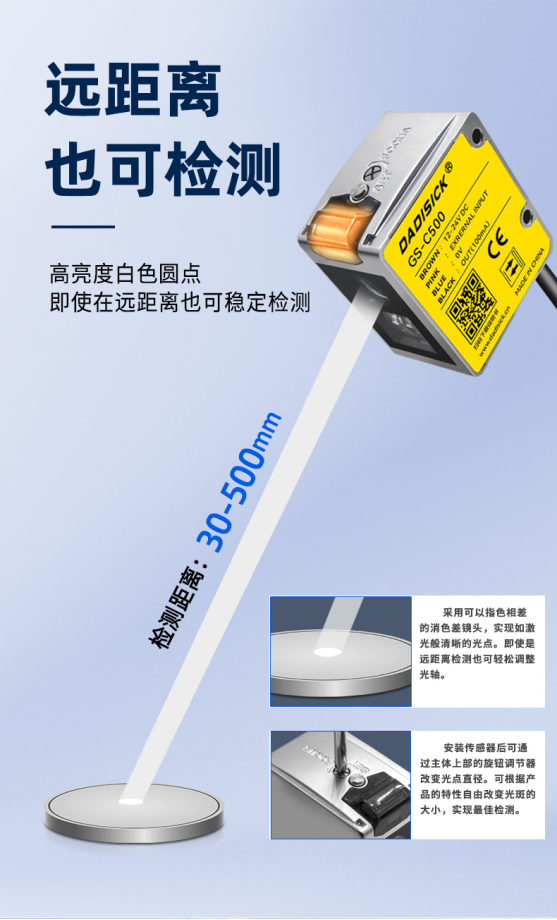
DK-GS-C500 Series — Long-Range Detection Champion
| Parameter | Specification | Engineering Significance |
| Detection Distance | 50 – 500 mm | No special mounting brackets needed on large packaging or printing equipment |
| Light Source | White LED | Covers full visible spectrum; works with any color mark |
| Response Time | 200 µs / 1 ms / 10 ms / 100 ms / 500 ms (5 selectable | 200 µs handles high-speed lines; slower modes improve stability for low-speed processes |
Built-in Timer | OFF / ON-delay / OFF-delay / One-shot | Eliminates need for external time-delay relays |
Ambient Light Immunity | Incandescent 10,000 Lx / Sunlight 20,000 Lx | Operates in typical factory environments without a light shield |
Supply Voltage | 10–30 VDC | Compatible with virtually all industrial power supplies |
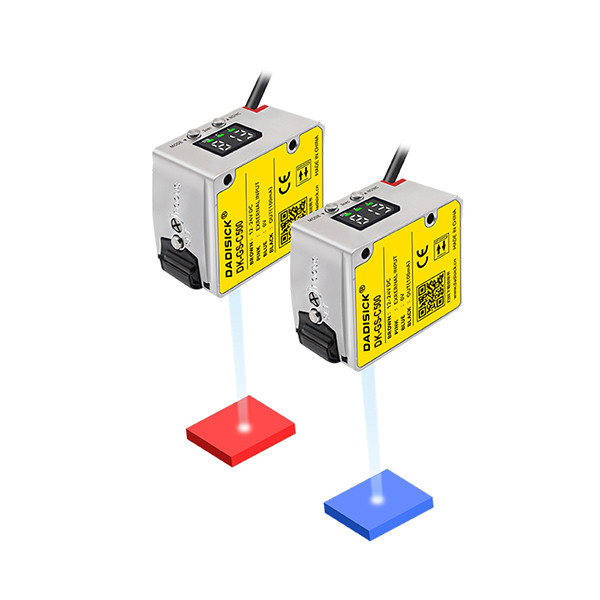
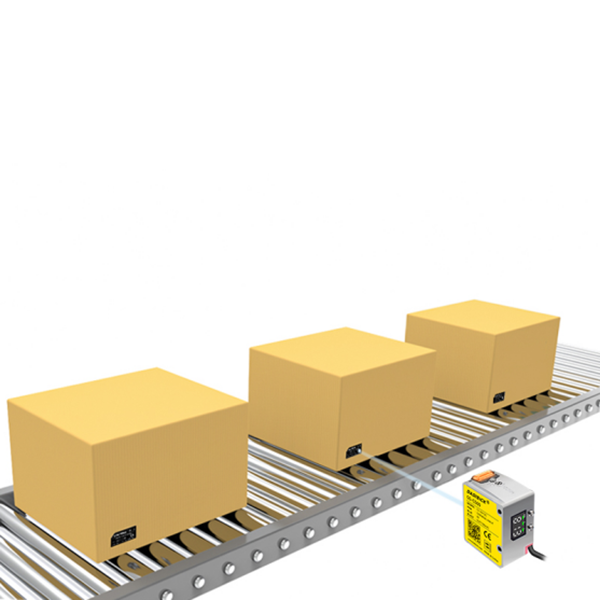
Typical Application Scenarios
Scenario A — Print-Register Alignment:
· Detection distance 200 mm;
· White-light coverage handles all ink-color registration marks with a single sensor across all print stations;
· 200 µs response matches high-speed press throughput.
Scenario B — Large-Format Packaging Machine Color Mark Positioning:
· Film width ≥ 800 mm requires a distant sensor mounting position; the 500 mm · range provides generous installation flexibility.
DK-GS-101 Series — High-Precision Compact Color Mark Sensor
| Parameter | Specification | Engineering Significance |
| Detection Distance | 18 – 28 mm | 2–3× farther than typical competitors (usually 8–12 mm); more flexible mounting |
| Light Source | Composite LED: Red / Green / Blue | Independent tri-color channels; auto-selects optimal detection channel |
| Spot Shape | 1.5 × 7 mm line spot | Linear spot aligned perpendicular to mark travel — maximizes detection window |
| Response Time | ≤ 200 µs | Handles 5,000+ detections per second |
Dual Mode | Color Pattern + Color Mode | One hardware unit covers both "positioning" and "color inspection" tasks |
Teaching Method | Two-Point Setting | Press twice (mark present / mark absent); sensor auto-calculates optimal threshold |
Hysteresis | Adjustable | Suppresses false triggers caused by vibration or mechanical jitter |
Seven Engineering Highlights of the GS-101
1. Built-in RGB source with auto channel selection — No manual guessing of "which color to use." The sensor internally compares all three channels and outputs on whichever offers the highest contrast.
2. 2–3× extended detection range — The 18–28 mm nominal range keeps the sensor farther from the target, dramatically reducing collision risk in environments with mechanical vibration.
3. One-button dual-mode switching — Color Pattern Mode: detects mark presence/absence for positioning. Color Mode: verifies whether a color matches the taught reference for consistency inspection. Switch via the pink wire under dynamic PLC control.
4. Adjustable detection hysteresis — When the measurement hovers near the threshold, hysteresis prevents output chatter — the anti-jitter core of the design.
5. Two-Point Teaching (Two-Point Setting) — An operator presses the button twice (once with mark, once without), and the sensor auto-calculates the optimal threshold. Compared to traditional multi-knob adjustment, setup is 5× faster.
6. Compact body for tight installations — On pillow-pack machines, labeling machines, and other space-constrained equipment, the small footprint is a decisive advantage.
7. Stable edge detection — Even when the detection zone spans a background-free edge, there are no false outputs. This is a firmware-level noise-rejection feature.
Five Real-World Application Cases (with Configuration Parameters)
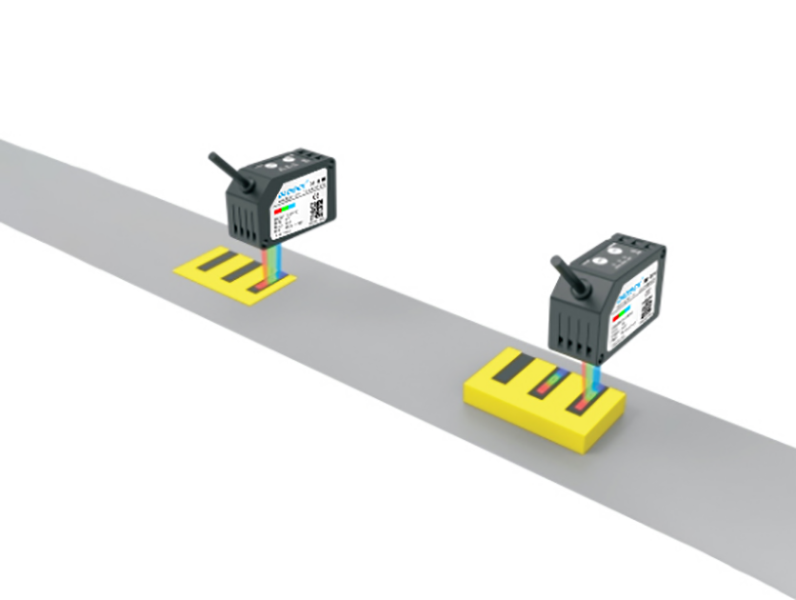
Case 1 — Pillow-Pack Machine: Color Mark Positioning
| Item | Details |
| Industry | Food & Personal Care Packaging |
| Line Speed | 180 packs / min |
| Mark Size | 3 × 5 mm black mark on colored printed film |
Background | Color printed packaging film |
Model Selected | DK-GS-101N |
Mounting Distance | 25 mm |
Detection Mode | Color Pattern Mode |
Key Config | Response time 200 µs; linear spot oriented perpendicular to film travel direction |
Implementation results: 8 hours of continuous operation with zero missed detections and zero false alarms. Two-point teaching can be completed in just 30 seconds.
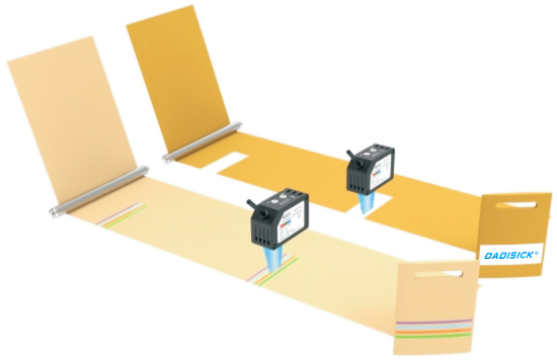
Case 2 — Automotive Interior Parts: Color Consistency Inspection
| Item | Details |
| Industry | Automotive Component Manufacturing |
| Target | Dashboard trim panels |
| Requirement | Batch color consistency; ΔE ≤ 1.5 |
Model Selected | DK-GS-101P |
Mounting Distance | 22 mm |
Detection Mode | Color Mode |
Key Config | Taught on a certified color-reference sample; tolerance window set to match ΔE ≤ 1.5 criterion |
Implementation result: Integrated with PLC for automated sorting. 100% rejection of out-of-spec panels; customer complaint rate reduced by 90%.
Case 3 — Pharmaceutical Line: Label Presence and Position Verification
| Item | Details |
| Industry | Pharmaceutical |
| Target | Color mark on bottle label |
| Line Speed | 150 bottles / min |
Model Selected | DK-GS-101N |
Mounting Distance | 24 mm |
Detection Mode | Color Pattern Mode |
Key Config | Hysteresis set to 15% to eliminate jitter from bottle conveying vibration |
Implementation result: 100% detection of missing or skewed labels; fully compliant with GMP regulatory requirements.
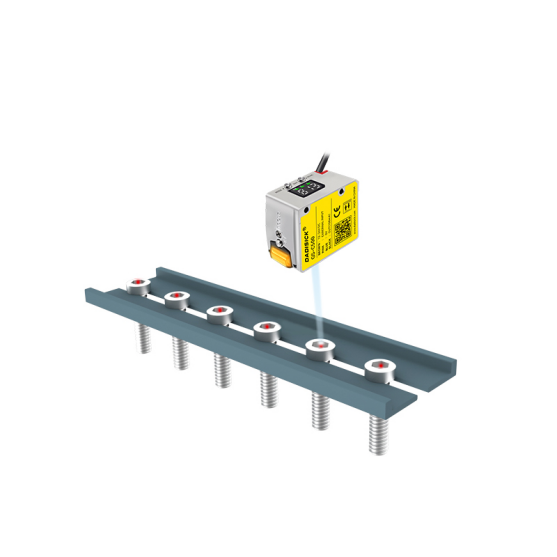
Case 4 — Fastener Manufacturing: Screw Color-Code Error-Proofing
| Item | Details |
| Industry | Fastener Manufacturing |
| Target | Color mark on screw head (differentiates strength grades) |
| Detection Distance | 150 mm |
Model Selected | DK-GS-C500N |
Light Source | White LED |
Response Time | 1 ms (balanced speed and stability) |
Implementation results: Effectively prevents the mixing of screws of different strength grades, avoiding potential assembly quality accidents.
Case 5 — Tape / Adhesive Presence Detection
| Item | Details |
| Industry | Logistics / E-Commerce Packaging |
| Target | The presence or absence of tape on the cardboard box |
| Detection Distance | 80 mm |
Model Selected | DK-GS-C500N |
Key Technique | Exploits the subtle reflectance difference between transparent tape and bare cardboard surface |
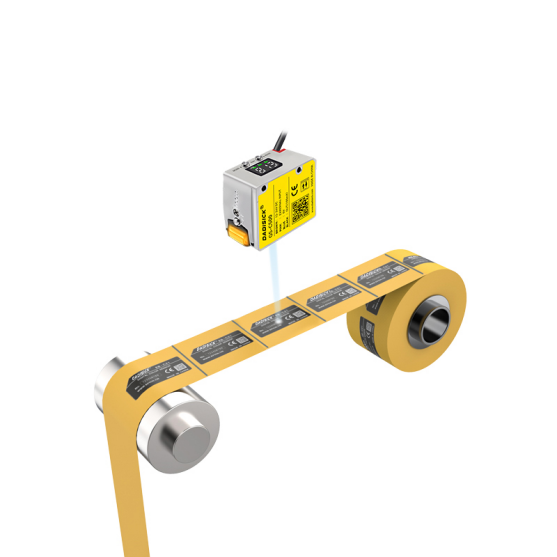
Six Golden Installation Rules (From 200+ Field Deployments)
Rule 1 — Install in the "Golden Zone" — Not at the Limits
Never mount at the stated maximum or minimum detection distance. Aim for 60–80% of the nominal range. For the GS-101 (18–28 mm nominal), target 22–25 mm for optimal signal margin.
Rule 2 — Orient the Linear Spot Correctly
The GS-101 emits a 1.5 × 7 mm linear spot. Always orient it perpendicular to the mark travel direction. This maximizes the detection window and minimizes the risk of the mark slipping past the spot undetected.
Rule 3 — Control Ambient Light
Although the C500 can operate under 20,000 Lx sunlight, if the sensor faces a factory window or a high-intensity light source directly, fit a simple light shield. The same applies to the GS-101 in bright-ambient environments.
Rule 4 — Background-to-Mark Contrast is Critical
If the mark color and background color have similar reflectance under the sensor's light (e.g., a purple mark on a dark blue background), detection will be unstable. Solutions: increase sensitivity threshold and hysteresis for white-light sensors; use RGB Color Mode for tri-channel composite analysis.
Rule 5 — Calibrate Regularly — Don't Skip Maintenance
Recommended schedule: visually inspect lens cleanliness every shift → wipe lens surface with a clean soft cloth weekly → re-execute teaching calibration monthly → inspect and tighten mounting brackets quarterly.
Rule 6 — Use the Built-in Timer Function (C500 Series)
The C500's built-in timer modes (OFF delay / ON delay / OFF delay / One-shot) can eliminate the need for external time-delay relays in many applications — simplifying circuit design and reducing potential failure points.
DADISICK Color Sensors vs. Competing Products
| Comparison Dimension | DADISICK GS-101 | DADISICK GS-C500 | Typical Market Alternatives |
| Detection Distance | 18–28 mm (2–3× longer) | 50–500 mm | 8–12 mm / 30–200 mm |
| Light Source | RGB tri-color composite | White-light LED | Mainly single-color LED |
| Response Time | ≤ 200 µs | 200 µs (fastest mode) | 300–500 µs |
Detection Modes | Color Pattern + Color Mode (dual) | Color Pattern Mode | Usually Color Pattern only |
Teaching Method | Two-Point Setting | Push-button + numeric display | Multi-knob adjustment |
Anti-Jitter | Adjustable hysteresis | Multi-step response time | Limited |
Built-in Timer | - | 4 built-in modes | Usually none |
Mounting Flexibility | Ultra-compact body | Remote long-range mounting | Distance-constrained |
Quick Troubleshooting Guide
Q: The sensor output stays ON and cannot be controlled. What's wrong?
· Check if sensitivity is set too high → Reduce sensitivity or re-teach
· Check if the lens is contaminated → Clean the lens
· Check for highly reflective objects in the background → Adjust mounting angle or add a light shield
Q: Missed detections at high speed?
· Confirm response time setting (C500: select the 200 µs mode)
· Verify that the light spot fully covers the color mark
· Confirm mounting distance is within the optimal range
Q: Inconsistent detection results between different production batches?
· Check for inter-batch color variation in the product
· Re-teach using a fresh reference sample
· Consider switching from Color Pattern Mode to Color Mode (GS-101)
Q: What's the difference between GS-101 Color Pattern Mode and Color Mode?
· Color Pattern Mode: Detects whether a color mark is present or absent → Output ON when mark present → Used for positioning and counting
· Color Mode: Verifies whether the color matches the taught reference → Output ON when matched → Used for color consistency inspection and sorting
Q: Will swapping NPN and PNP connections damage the sensor?
· DADISICK sensors include built-in short-circuit protection — they generally will not burn out
· However, the output logic will be inverted. Always select the correct type to match your PLC input specification
Why Choose DADISICK?
As a team deeply focused on industrial color sensor technology, our advantages are grounded in three pillars:
Technical Depth
· Two independent technology paths (white-light / RGB), covering 18 mm to 500 mm full detection range
· 200 µs response time — industry-leading performance
· Dual mode, multi-step settings, built-in timer — every feature born from real field requirements
Ease of Use
· Two-Point Teaching lowers the skill barrier — line operators can master setup in 5 minutes
· Wide-voltage design (10–30 VDC) compatible with mainstream industrial power systems
· Compact body fits virtually any mounting constraint
Service Commitment
· An expert technical team is available online for selection guidance and troubleshooting
· Custom application configuration recommendations based on your specific requirements
· Full documentation: bilingual (Chinese & English) datasheets and user manuals provided
Take the Next Step
If your production line is facing any of the following challenges, we're ready to help:
· Unstable color mark positioning on high-speed lines — frequent false triggers and missed counts
· No reliable automated solution for product color consistency verification
· Existing sensors lack detection range; mounting positions are constrained
· Frequent product changeovers are dragging down setup efficiency
📧 Technical Inquiry: sale@dadisick.com
🔗 Browse Color Sensor Products: https://www.dadisick.com/products2142317/Color-Sensors.htm
After years in industrial sensing, the biggest lesson I've learned is this: the scariest thing on a production line is not equipment that breaks — it's equipment that sometimes works and sometimes doesn't. A color sensor might represent only one-thousandth of the total hardware cost of a production line, but a single false trigger can produce scrap at best, and a full-line shutdown at worst. At DADISICK, we firmly believe that making every sensing node absolutely reliable is the highest form of respect for automated production lines.
Related Safety Devices
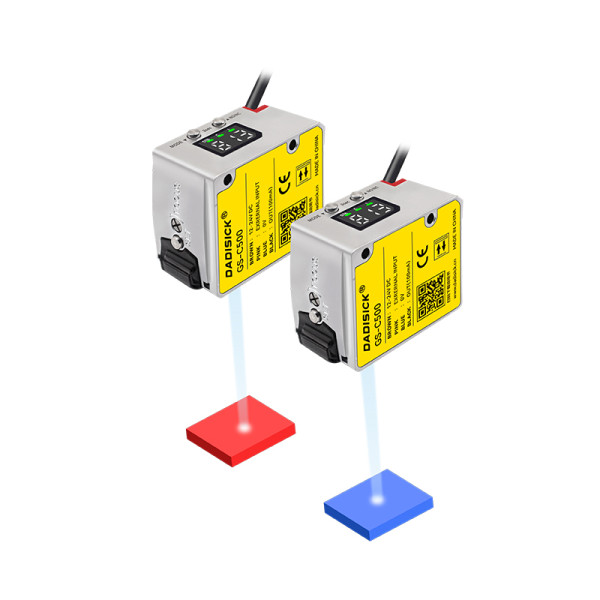
Detection distance: 50 to 500 mm
Response time: 200 μs/1 ms/10 ms/100 ms/500 ms
Light source: White LED
Power supply voltage: 10 to 30 VDC with ripple (P-P) 10%, Class 2 or LPS
I/O Control output: NPN open collector/PNP open collector
I/O External input: Tuning/stop transmission switch type
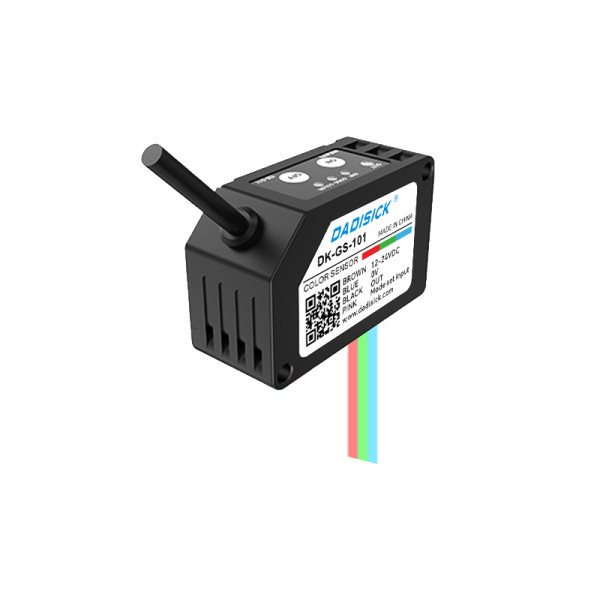
Detection distance: 18 to 28 mm
Power supply voltage: 24 V DC ± 10% pulsation P-P below 10%
Mode switching input: Color pattern or Color mode
Output type: NPN or PNP
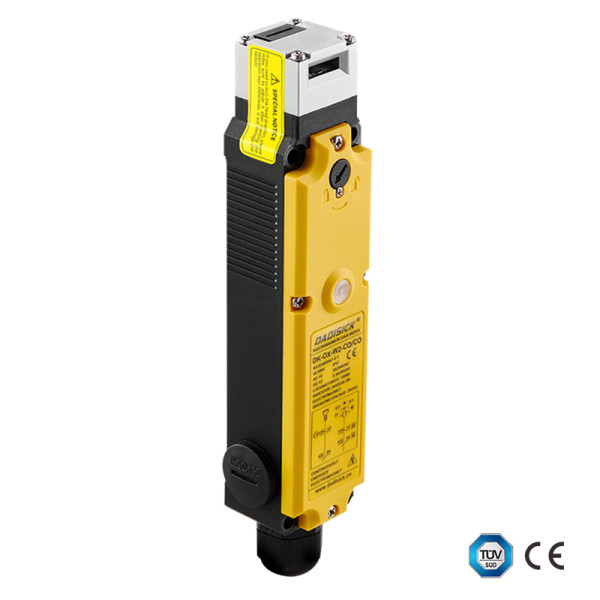
Durable DK-OX-W2 safety interlock switch with mechanical locking and tamper-resistant design, IP67 protection, ideal for machine guards and industrial doors; request a quote or datasheet.
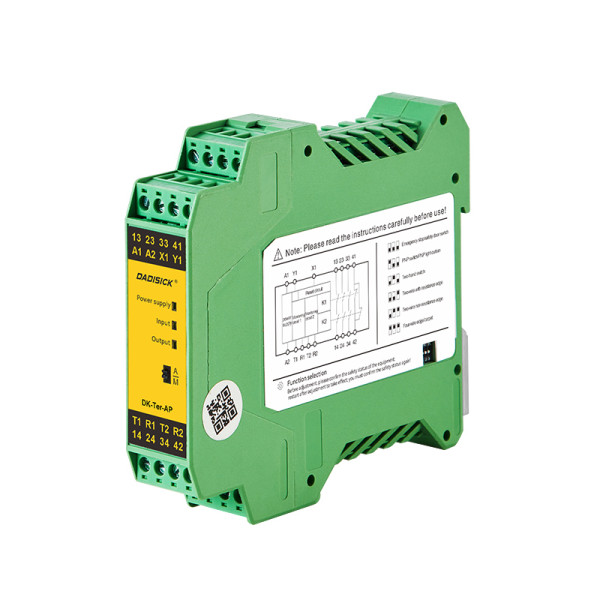
Multifunctional safety relay, providing automatic/manual reset configuration and multifunctional configuration DIP switch, used for industrial field monitoring of various signals with high safety requirements.
Similar Posts You May Be Interested in

Title
Sample Content